


Industrial Transition and Local Value Creation

Timeline
2025: Environmental Impact Assessment and Environmental Permit for hydrogen production enter into force
2025: Norsk e-Fuel becomes co-owner of Project Alby now Alby PtX
2024: Prime Capital acquires Project Alby and announces development partnership with RES
2024: Permit application submitted for Hydrogen Alby later Alby PtX
2024: Permit application submitted for Storåsen Wind and Hydrogen Ljungaverk
2024: Land and implementation agreements signed for Alby
2023: Björnberget and Gubbaberget wind farm completed
2022: Detailed development plan for Alby finalized
2022: RES acquires land in Ljungaverk
2022: Tovåsen transmission station completed
2021: Construction begins on the Björnberget and Gubbaberget wind farm
Alby PtX builds on Ånge Municipality’s initiative to create local value from the renewable energy produced in the region. Years of investment in wind power have helped provide competitively priced renewable electricity. Together with available land, transport links and process water, this has created strong conditions for new industries.
These efforts began to take shape in 2021, when the municipality signed an agreement with RES for hydrogen production. Within a year, Ånge then developed a detailed plan for the industrial site at Alby Östra, with hydrogen at the centre of a cluster where industries could share resources and infrastructure, supporting a circular economy.
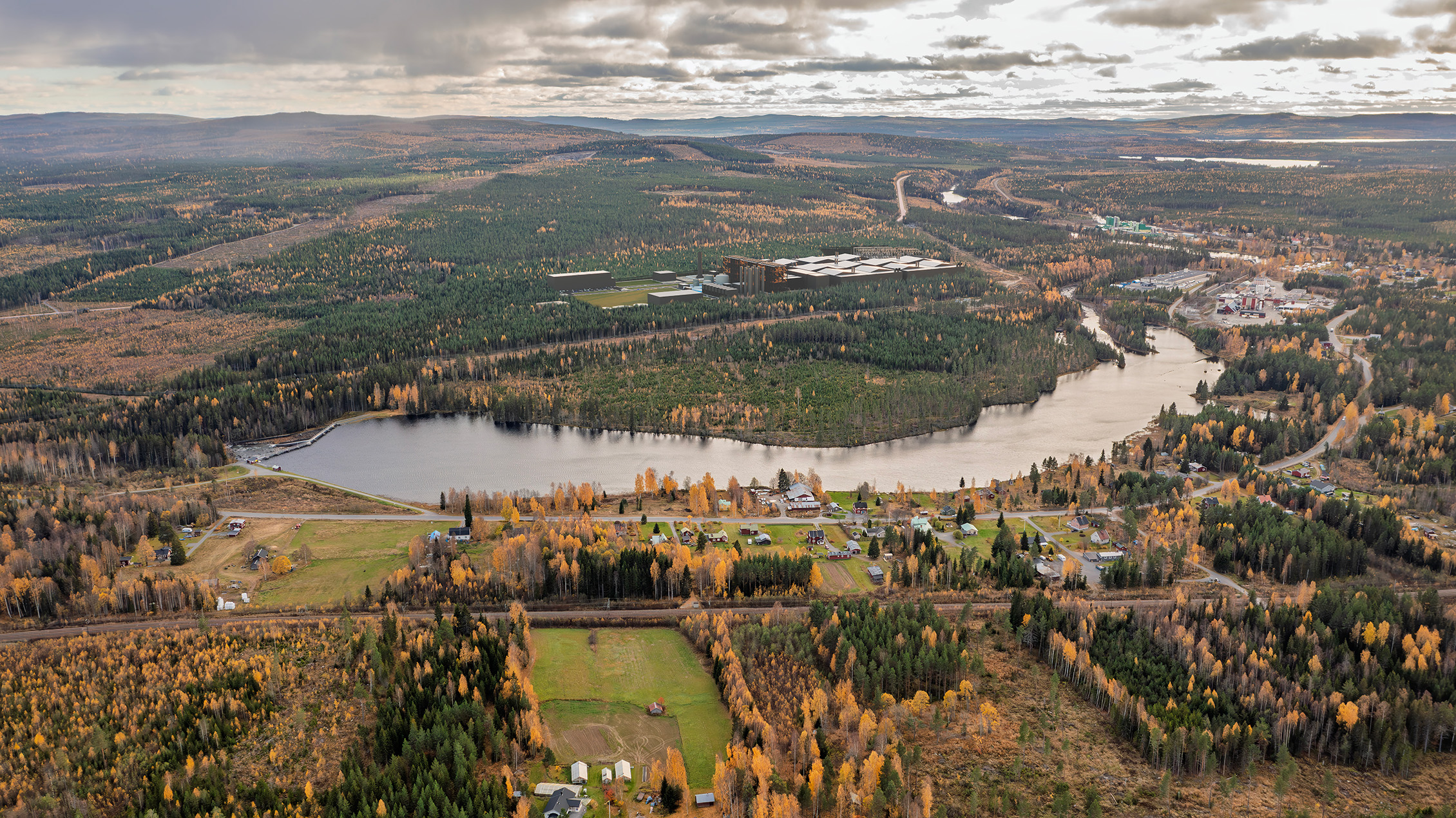
This joint initiative paved the way for the integrated sustainable aviation fuel plant that Alby PtX is planning today. When Prime Capital and Norsk e-Fuel acquired the project, they continued the partnership with RES, building on their expertise and longstanding local relationships. Alby PtX carries this original vision forward, connecting the region’s renewable energy with new industrial opportunities.
“When I arrived in Ånge, the municipality had long struggled with depopulation and deindustrialization. But there is a strong drive here, and work had already begun to identify areas suitable for industrial investment. We made the decision to collaborate with RES to create change; something that has been crucial for our development,” says Mattias Robertsson Bly, former Municipal Director in Ånge.
What Will the Facility Contribute?
EUROPEAN FUEL PRODUCTION
The e-Fuel facility will enable local fuel production in the European Union and will secure a place in tomorrow’s market contributing to energy independence and resilience, but also to achieving climate goals and reducing fossil emissions.
Industrial Transition
Right now, there is a major push toward transitioning towards creating fossil-free solutions for aviation. This transformation is crucial not only to securing a place in tomorrow’s market and energy independence, but also to achieving climate goals and reducing fossil emissions.
New Industrial Investments
An e-Fuel facility like this attracts both Swedish and international companies to invest in the region and establish new industries in Alby and the synergetic environment.
Jobs
As industries relocate to Site Alby to leverage the potential for symbiosis, new job opportunities will emerge. The anticipated demand for labor among current stakeholders across the e-Fuel plant project is expected to lead to a significant increase in employment within the region.
New Business Opportunities
The e-Fuel facility marks the starting point for a circular industrial cluster where different industries can benefit from each other’s by-products. This opens up opportunities for additional business ventures and establishments not directly linked to e-Fuel or hydrogen production.
As countries accelerate the energy transition to meet climate targets and strengthen energy security, northern Sweden is becoming a hub for new industrial development.
Beyond its own contribution, the e-SAF plant to be built and operated by Alby PtX will serve as the cornerstone of the new industrial cluster, connecting sectors such as energy, transport and heavy industry. At the heart of the facility is the Power-to-Liquid process, which converts renewable electricity, water and captured carbon dioxide into sustainable aviation fuel. Heat and oxygen as side-products from the e-SAF production process could supply neighbouring industries, and even hydrogen could be provided where needed. In addition, connecting industries with complementary resource and infrastructure needs can improve efficiency, reduce waste, and deliver environmental and economic benefits.
The collaboration with BigAkwa serves as great example. Their planned fish farm could use oxygen from the e-SAF production to aerate the water and heat from the facility to maintain suitable water temperatures. Waste from the fish farm could, in turn, provide nutrients for greenhouses or be processed into fertiliser.
